
There are several negative habits that may contribute to acne breakouts, and one of these relates to mistaken attempts to clear it up: Picking at or popping pimples. While it may seem like a good idea in the moment, and feels like it accomplishes something and gets rid of a negative mark, popping pimples yourself is not advised and actually will likely worsen your breakout.
At Skintherapy, we provide a wide range of acne removal and treatment options for those who want to rid themselves of these breakouts. What’s the problem with self-popping, and what are some of the potential negative outcomes? Most importantly, what are some healthy alternatives that will help limit the breakout? Here are some basics to understand.
When a pimple becomes inflamed, like it often is before we decide to pick at it, it’s engorged with sebum, dead skin cells, bacteria and generally a pus of some kind. When you put pressure on the area, then, you’re creating even more pressure than there already is in this area, forcing those various pieces of debris down further into the skin follicle.
But, you might be thinking, I’m squeezing pus and debris out of the pimple – isn’t that good? For starters, this debris can spread bacteria to other nearby skin areas. For another, even if some pus is moving out of the area, it’s a sure bet that even more is being pushed down into the dermis, worsening the breakout.
In addition to potentially worsening the breakout itself, popping pimples is one way to worsen your blemishes and even risk long-term acne scarring damage. Enough squeezing can actually turn a pimple into a more serious blemish type like a cyst or a nodule, potentially serious and painful marks that are due to infection in the dermis.
In addition, each time the skin is damaged this way, its ability to heal itself properly reduces. Healthy tissue is lost over time, and the greater the damage, the higher the risk of this loss. Either dark marks or full-on depressed acne scars can develop.
What are some safer methods for attempting to get rid of these marks? Here are a couple suggestions:
For more on why popping pimples at home is a mistake, or to learn about any of our acne treatment services, speak to the staff at Skintherapy today.
When treating acne, it’s important to have a solid handle on what works and what doesn’t for your issues. All patients have slightly different acne-related symptoms and concerns, all under the backdrop of typically causes and exacerbators of acne that are familiar to most people who have suffered from it.
At Skintherapy, we’ve noticed that there are unfortunately a number of major myths and misconceptions out there about acne – from what causes it and worsens it to how it can be treated. With our acne treatment services, you’ll be exposed to the truth about various acne causes, plus given the right tools to clear up your latest breakout. Here are a few of the most common acne-related myths, plus the proper information to set you straight.
Many with acne are aware that one potential cause can be the oils and other liquids found in your skin – this is not a myth, as oils are indeed a common risk factor in acne formation. However, some acne sufferers take this information and run in entirely the wrong direction with is, assuming that if they simply dry out their face and limit the presence of these oils, acne will clear up no matter what.
Unfortunately, this isn’t how it works. Drying out the skin doesn’t actually have much of an impact on the pores, which is where these oil concerns are to begin with. In addition, it will create sensitivity and flakiness on the skin, making it both unsightly and uncomfortable in many cases.
Another common misconception with acne is that its only cause is dirty skin – while the cleanliness of the skin does play a role here, it’s far from the only factor. But unfortunately, this myth leads many patients to vastly overdo things when it comes to cleansers, soaps and other facial cleaners. This may actually irritate and worsen your acne rather than clearing it up.
Instead of doing this, target your cleansing properly. Use the right kind of cleanser, including one with benzoyl peroxide or another sensitive material if your skin needs it. You shouldn’t need to perform basic cleansing more than once or twice a day.
Multiple areas of research have proven that, while chocolate has a bad reputation for causing acne, this reputation is unfounded. Chocolate is not a cause nor an exacerbator of acne – but many other foods, such as those high in salts or iodides, absolutely are. Areas like greasy food (fast food especially), high-fat dairy, kelp and many others should be avoided or limited as much as possible. In addition, if you take vitamins or supplements on a daily basis, check their quantity of iodides and scale back on these if possible.
Finally, understand that sunscreen is very important to wear if you have acne, just make sure it does not contain any pore clogging ingredients. Sunscreen stops acne spots from pigmenting, plus provides hydration to the face during the day between cleansings.
For more on debunking the common myths out there about acne, or to learn about any of our acne treatment services, speak to the staff at Skintherapy today.
When it comes to acne, particularly for teenagers and young adults, there’s a specific connection between this condition and hormones in the body. Hormone fluctuations are a direct cause of acne, and these age groups experience the largest changes in these areas and therefore deal with this with the greatest frequency.
At Skintherapy, we’re here to remind you during all acne prevention and treatment services that hormones aren’t just a concern for younger people, however. The term “hormonal acne” is used to describe acne that develops in women around the time of their monthly menstrual cycle, and this specific cause for acne comes with a few notable symptoms and differentiators in some cases. Let’s go over all the basics you need to know about hormonal acne, including the groups at risk and some treatment methods available.
Hormonal acne is on the rise in the last few decades, some of which is due to worsening average diets and lifestyle habits, but some of which is also due to changes in the way female hormones are impacting broad groups. But how do hormones cause this sort of acne?
In many cases, the body is producing too much of a given substance, often testosterone or other androgens that should only be made in limited amounts for women. In some situations, these hormones will combine with other acne triggers like bacteria and dead skin cells, creating an even higher acne risk for women at this time of month.
Like with other forms of acne, the primary risk group for hormonal acne breakouts is young women in the teen and adolescent ranges. However, since women have several hormonal shifts during their life which include pregnancy, breast feeding, perimenopause and menopause, they may encounter hormonal breakouts into their 40s and 50s. Acne overall may affect over three in four teens, and teen girls are at particular risk during the parts of the month closest to their period.
However, it’s important to note that when it comes to hormonal acne, women of all ages can experience it. It can even take place in women who had no acne as teens, but are now developing it later in life.
In some cases, hormonal acne will appear a bit differently than other forms. For one, the presence of whiteheads and blackheads tends to be limited – women over 20 who get hormonal acne will usually see it in the form of red, inflamed papules around the chin and jaw area.
In addition, hormonal acne tends to show up on the cheeks and forehead. Bumps or pimples will often last for weeks even with treatment.
There are a few avenues to treating hormonal acne, some of which may overlap:
For more on treating hormonal acne for women, or to learn about any of our acne treatments, speak to the staff at Skintherapy today.
At Skintherapy, we take a comprehensive approach to your acne treatment and skin care. Through a combination of various products tailored to your needs plus our LED Light Therapy Treatment, we’ll help you with a full consultation and subsequent appointments that will establish a strong skincare routine and work to clear your skin of any acne concerns.
There are several specific services out there in the realm of skin and acne care, and in some cases these may help supplement parts of our treatment. Two such treatments are microdermabrasion and chemical peels, both of which can have fantastic benefits for several areas of skin care. But it’s also important to understand that these services should not be used as full-on substitutes for an acne control program, but rather as complementary pieces. Let’s look at the simple steps we recommend for acne control, plus how these services might fit into the picture for you.
When it comes down to it, acne control is really about three primary factors:
Some skin is naturally more oily than other skin, and those in this position have to work to control this. Others may deal with pores that are larger than usual, or may be more prone to buildups of dirt or dead skin. Now let’s look at how these additional skincare services play into this picture.
Microdermabrasion is a procedure used to help renew and replenish skin texture and tone. It’s often used on things like wrinkles, lines, sun damage and related skin damage areas, with an abrasive surface applicator that sands away outer layers of skin, helping new skin grow in. It’s great for many skin types (virtually all but hypersensitive skin), and is also used in many cases by those looking to limit the signs of aging on the skin.
When it comes to acne, microdermabrasion is not a standalone treatment. It does not directly help clear the pore of oil, bacteria or other buildups. It can, however, help with clearing away acne scars and improving the appearance of the face after acne has already been controlled using our products and homecare program. It should never be performed on acne before this point, as it actually risks spreading harmful bacteria to other areas of the face and touching off breakouts in other areas.
A chemical peel involves applying a specific chemical solution to the skin, one that uses acid to help exfoliate the skin. There are a wide range of chemical peels available, including some that are good for oily and high-acne risk skin.
Like microdermabrasion treatments, though, chemical peels are not meant as standalone acne treatments. They can help clear out dead skin elements that may be contributing to pore blockages, but they will not address the full scope of acne causes. They’re also often used for post-acne care treatment for limiting redness, scarring and hyperpigmentation issues.
For more on how microdermabrasion and chemical peels are less primary acne treatments and more supplementary, or to learn about any of our skin or acne care services, speak to the staff at Skintherapy today.
There are a number of factors that may impact the presence of acne on the face, whether for high-risk teens or people in other age groups. One major area here is the foods and drinks we consume, which can play a big role in several areas of bodily health and appearance, including the potential for acne.
At Skintherapy, our acne services include a full consultation that will cover several areas, including how the foods and drinks you consume might be impacting your acne and skin care. One particular buzzword in this area is “junk food” – what exactly do we mean when we use this term, and what are some examples of junk foods that are particularly harmful for acne sufferers?
When we speak about junk food within the realm of acne and skin care, or really in any format, we’re talking about food that has a lot of calories and often tastes very good – but is badly lacking in positive nutritional value. This might take several different forms, from packaged food to fast food and many other types. It all essentially comes down to the way the food was made and the ingredients used in it. In many ways, we’re really just saying “unhealthy” food when we use the junk food term.
Research has shown numerous times throughout the years that junk food can have a direct impact on the skin, and particularly people who suffer from acne. The primary reason for this: It tends to contain high quantities of the exact elements that promote acne.
One such element is oil, which is known to settle on the skin and block the pores when it’s overly present in the body. Junk food also tends to contain high degrees of sugar and salt, which create inflammatory reactions in the body – acne is one such reaction. Every time you consume junk food, you’re stressing your body’s ability to filter these ingredients out and stay balanced from a skin care perspective.
There are many foods and beverages that may fall under the junk food classification to some degree, but there are a few we’ll identify here in particular:
What’s one common characteristic of all these foods? They’re bad for both your overall health and your acne risks. With this in mind, a general reduction of these foods is good for multiple reasons.
To learn more about how junk food impacts your acne and skin care efforts, or for information on any of our acne products or services, speak to the staff at Skintherapy today.
The desire for perfect, blemish-free skin is one everyone in our modern society strives for. You see pictures of splendidly perfect skin everywhere on Instagram, Facebook, magazines.
But what’s that, you say? More acne? Scabs? Dry skin? It sees like no matter what you do, you are stuck with pimples and bumps.
Some may resort to picking. At least that way, you have control over something. At least that way, you can see a difference, feel a difference.
Picking at your acne can be a form of self-harm. The actual name for it is Dermatillomania and it affects many people with acne and even some without the acne. There are two kinds of Dermatillomania, one of them is an addiction and the other is a compulsion.
A compulsion to pick stems from feeling a sensation in or on the skin that makes you want to pick at it to make the sensation go away. This sensation stems from factors usually inside the body like bad reactions to food, medication, stress, and lack of sleep. People with a compulsion sometimes don’t even realize they are doing it. They just go at it when they get an itchy feeling or some other trigger.
An addiction to picking comes from trying to manage stress in an unhealthy way, or simply because picking feels good. The desire to pick generally comes from wanting perfect skin, so the picker will use any means necessary to even out and flatten blemishes. They believe this will help their appearance when the opposite usually happens. People who are addicted to picking will feel a general sense of relief or a rush when they are finished picking. Think of it like a form of managing stress; they do it to escape their thoughts or problems for a little while and in process, damage their skin.
The need to have some sort of control over reality is often a big factor for people who pick at their skin. It is also a form of perfectionism, and sometimes it may be from other underlying factors like OCD, although that is not always the case.
Managing picking depends on whether you are addicted to picking or if it is a compulsion but the remedies can be very similar.
With an addiction, it’s best to focus more on reconditioning your mind and thoughts that lead up to the picking. Many of the ways to remedy this are similar to other addictions. Changing up your routine, avoiding people and places that make you want to pick, and even changing your diet can all help tremendously in managing the picking tendency.
To manage the compulsion to pick, there are usually a few environmental factors that need to be changed in order to stop. Adding consistency is a huge step. Sleeping and eating routines should be carefully looked at, as those can cause the “itch to pick.” Also considering what foods and medications may be triggering the desire is helpful so you can manage them better. Looking at what goes into your body will help you better understand any imbalances within that lead to compulsion.
Having a guide to help you work through these issues is important to not feel so alone when dealing with an addiction or a compulsion. Sometimes it can be hard to see that there is a problem and having someone else there to show you what the problem is and how to deal with it, is extremely important. But the most important factor of all is that YOU decide to quit. It’s not about anyone else until you make the decision to stop.
The only way to stop picking is to realize that you want to stop. But it doesn’t hurt to have some help along the way. Call us at 801-800-6602. We not only help with acne, but we offer support to those who want to quit picking and get clear skin in the process. We can help you manage the stress that comes from picking by making acne less of a problem. Whatever assistance we can offer for you to obtain clear skin, free of acne and picking scars, we are here to help. Making an appointment is the first step!
One of the biggest complaints that we hear when clients come into our acne clinic are their bad experiences with past acne treatments. Anything from a doctor pushing too hard for them to get on antibiotics or Accutane, or even telling them that everything they’d been doing up to that point that was actually working was wrong. Is it any wonder that many people leave these appointments feeling even more confused about how to treat their acne?
The average dermatologist visit lasts anywhere from 10-20 minutes. You may go into fervent detail about what your symptoms are, what products you’ve been using, and how your skin reacts to certain ingredients. At which point, the doctor may or may not closely examine your skin for a moment or two….and then suggest you get on Accutane. Perhaps you’ve read about Accutane or you’ve tried it before, or maybe you only have mild acne to begin with. You may have health concerns or mental health issues that make you skeptical if such powerful drugs are the right choice for you. But this doctor doesn’t seem to have the time or the patience to listen to your concerns and go through all the details with you--they just want to treat you and move on.
Your next appointment with them will usually be three months later. At which point, perhaps things have improved, but usually they haven’t, simply due to the fact that the initial meeting was so pressed for time and so few questions have been answered. The dermatologist may tell you at this point (even more earnestly) that you must get on prescription drugs. Or they might even tell you that you are not washing your face enough (as if you haven’t heard that before.)
By the end of this even shorter meeting, you may feel that you are your wit’s end. Many people may even stop trying to treat their acne altogether at this point because of impatient doctors and pressure to start drug trials. They’re left with scars and redness for perhaps the rest of their lives. They may never get the care they needed for their acne.
We’ve heard this story so many times from clients who come to us as a last resort. “I was rushed at my appointment” is a big one when referring to a dermatologist.
Of course, not every dermatologist or doctor is like we described above, but we hear it so often, it seems like most of the time, they simply don’t have time to treat something as “non-life threatening” as acne. But acne affects a person’s life in so many important ways; self esteem, self worth,self confidence. These are all things that a person needs to live their best life. With acne, it just makes all the most important aspects about life seem more challenging than necessary.
You don’t want acne on grad night. You don’t want acne when you’re dating someone new. You don’t want acne on your wedding day. These are all real life events that are affected badly when one has acne, without even mentioning day to day life. The struggle is real.
Let us share with you a few things you should be looking for in a good acne clinic:
A consultation should take much longer than just 10 minutes, especially if it is the first time you are meeting with someone. You want to work with someone who really listens to what you’ve tried in the past, what’s working for you now, and then discerns how bad your acne really is. Without these things, you’re not going to make the progress you desire. You’re just another patient on a clipboard. What you really need is someone who talks to about options and processes that will be most effective for you.
To truly get acne clear, you must be seeing a professional much more than once every three months. It takes work to get acne clear. Work that may include visiting the clinic every week or every other week at first. This ensures that your skin is reacting well to products and procedures. It should seem like whoever you are working with truly cares and wants to ensure your success.
It’s safe to say that many skin problems begin below the surface. Without touching the problem areas, it can be hard to tell what’s actually going on underneath. A good acne clinic will study your skin carefully so as to issue the correct and specific course of action best suited for your skin. Practically never will they recommend getting on strong prescriptions or heavy antibiotics. Your skin can get clear without them and it just takes some time with a professional to figure out how.
Acne isn’t just about genetics or products, it’s also about lifestyle. A great skincare professional will consider what other aspects of your life may be contributing to your acne. Do you workout and sweat a lot without wiping the sweat and dirt from your face and body afterward? Are you wearing enough sunscreen, even when it’s cloudy or cold outside? Are you drinking lots of milk or eating foods with too many hormones?
All of these things should be examined closely and taken into consideration. You want someone to care about clearing your acne just as much as you do! And you also want to work with someone who truly enjoys the process. This is what makes the journey of clearing acne more fun and long lasting than just trying to taking the drugs prescribed by a doctor or dermatologist. This way, you are ensured a much higher degree of success and satisfaction.
Don’t just settle for a doctor who may not have the time and energy to really help you get results. Look for the best options, clinics that offer what we mention above and more. Not only will you be much happier with your progress, but you are also much more likely to achieve the results you deserve.
Come check out our Acne Clinic. UtahAcneClinic.com.
Whether or not to take Accutane (or Isotretinoin) is no small decision, as it has some serious side effects that come along with taking it. Although countless personal and medical trials have been done on it since its release in the early 1980s, there are a lot of side effects that you should be aware of before starting on this drug. Here we will start with some of the short-term side effects.
Accutane’s most common side effect is dry lips, almost always described as “painful and persistent.” Can be treated with lip balms and products like Aquaphor, but these do not actually make the dryness go away, just abates it for a short while. Besides dry lips, there’s also extremely dry skin, which can last beyond the time the drugs are taken for some patients. This dry skin has been characterized as “½ inch chunks falling off at a time,” which was sometimes helped by moisturizers, but not all the time. All patients describe extreme caution when it comes to exposure to the sun, as Accutane causes skin fragility and thinness, therefore sunburns develop much more easily and severely. Hair loss is another common but not as serious side-effect. However, this particular reaction seems to be more prevalent in men than in women.
Other frequent side effects include extreme fatigue, headaches, and brain fog.
The longer-term side effects of Accutane can be more subtle but other times far more serious. Many users of this drug report having continual dry eyes after they stop taking it. Some describe this as painful at worst and annoying at best. The more serious side effects include damage to the intestinal lining, leading to Irritable Bowel Syndrome or even Crohn's Disease. Besides the possibility of an inflamed intestinal disease, there are other factors like joint and body aches, which can vary from mild discomfort to being nearly in constant pain.
Among the more serious side effects of taking Accutane, mental health is often affected. Patients have often reported some sort of depression, anxiety, or wild mood swings related to Accutane and a smaller percentage even report more serious mental health issues. It is always recommended that you talk to your doctor or healthcare professional if these symptoms occur with you.
A lot of people turn to Accutane when they think they don’t have any other choice. Unfortunately, many dermatologists are all too happy to prescribe it so patients will receive quick results. But oftentimes, these results come at a cost. We talk about many of the side effects here in this blog, but have barely mentioned all of them, some of which include long term fertility issues and horrible problems with pregnancy if it occurs while taking the drug. Most often, doctors will prescribe termination as becoming pregnant on this drug causes huge problems for the fetus.
Accutane is a serious solution to a dire problem, but it is NOT the only solution. In fact, it is one that we most often recommend is not even necessary.
You may have tried everything you can think of; chemical exfoliation, drugstore acne remedies, facials, you name it. And nothing worked. That doesn’t mean that you simply have to turn to drugs like Accutane. It is a not the easy way out.
Far more beneficial to your well being would be to find a skin care professional who deals with mostly acne. Dermatologists can see acne as a frivolous problem that can be treated easily with drugs, but that is not the case! You want to be more than a chart in a doctor’s long list of patients. Find someone who has time to actually take a deep look at your skin and find a viable solution without drugs. Not only is it possible, but it is much better for your long term health than seeing someone who immediately tries to put you on drugs.
Believe it or not, acne can be treated topically, with products on the skin. We know this because that’s exactly what we do everyday. In the same amount of time it would take to get clear with Accutane, we can also get your skin clear, but without any of the nasty side effects of serious drugs (perhaps some dry skin, but that’s it, and easily fixable!)
Acne affects so many aspects of our daily lives. If you have acne, chances are your self-esteem is down the drain and you just want to stay inside, sometimes not even wanting to spend time with friends and family because it is so bad. That is not good! It makes life harder when it shouldn’t be.
That’s why our main goal here at Skintherapy to help people with acne get better. The best way to do that is to let us guide you with the right products and routine so that your skin gets clear and STAYS clear.
That’s our promise to you.
Look into booking an appointment here today and you won’t be disappointed.
The experience most people have with acne is this; calling a dermatologist and scheduling an appointment, at that appointment, the doctor spends 5-10 minutes looking at your skin and then suggests you take some sort of antibiotic, contraceptive, or other medication. These medications often have uncomfortable short and longterm side effects, so most people end up not taking all of them, or only taking them for a short time before giving up. If you have experienced this yourself, you are definitely not alone.
The short answer to the question of whether or not you need medication to treat acne is a simple no. But the real answer is infinitely more revealing.
The bold statement we make here at Skintherapy is that acne can be treated at the root without medications. How, you ask? With a regimen of the proper products and lifestyle changes.
If you grew up with acne or even got acne later in life as an adult, you know the struggle of dealing with it every day can get tiresome. The question of whether or not you should get on medication is unfortunately a common one, but that doesn’t have to be the answer for you. You can accomplish the beautiful, clear skin you want without ever taking a single pill or antibiotic.
We are confident in the fact that we can help get your skin clear with the proper commitment and process. That is why we are here. As experts, we have a unique outlook on acne and how to care for it. That’s because the issue isn’t just “skin deep.” There is a lot going on underneath the skin and you need someone who knows what to look for so they can minister the correct products and services for you.
This goes beyond a simple “Let me have a look at you.” Here we take pride in getting to the root of the issue causing your acne specifically, whether that be food, makeup, cleansing routine, products, or even the laundry detergent you use. Everything has the ability to help or hinder your skin clearing progress. You want clear skin, you want to be able to take a look at everything in your life and decide whether it’s getting you closer to that goal, or further away from it.
After working with hundreds of people, helping them get their skin clear and seeing the drastic change it makes in their everyday lives, that’s how we know it works and that it is worth it.
You may not know where to start when it comes to your acne. You may be scared. Lots of people are when they’re just starting out. There is so much information out there on the subject. It can be hard to know where to begin.
There is a lot to caring for acne, but you don’t have to do it alone. We have the tools you need and they don’t require you to take medications with ill side effects or any other pill or medicine. Your skin can get clear without all that. All it really takes is an initial appointment for you to see the effectiveness of working with a true Acne Expert.
To book your consultation, click here.
Think about all the new experiences that happen in your teens; driving, dating, college, friends, jobs. Teens teeter on the line of independence and discipline essentially until the day they move out on their own. It can be a tumultuous time for teenagers. And on top of that all that, there’s frequently another struggle.
Acne is primarily caused by genes and hormones. Once those teen hormones start kicking in, the skin doesn’t stand a chance. Breakouts, zits, and blackheads affect as much as 80% of people between the ages of 11 to 30 and can take even longer to clear up. What can you do to help your teen?
Food can be a big trigger for unwanted breakouts, so we’ll go over some of the most common triggers here:
1. Milk
Milk is chock full of calcium, minerals, lactose, and hormones and growth factors. It’s those last two ingredients that really mess with a person’s own hormones and that can lead to acne.
2. Peanuts and Peanut Butter
Peanuts are high in androgens, which are another type of hormone that affects acne in a bad way.
3. Soy (tofu, soy milk, edamame)
As delicious and seemingly healthy as these items are, they wreak havoc on acne-prone skin due the many of the same reasons listed above. The estrogen hormones in soy cause skin to freak out and break out.
4. Whey, protein shakes, or protein bars
These products typically contain iodides, biotin, or a combination of both. Both of these ingredients have been proven to make acne worse and it is best to avoid them as much as possible.
5. Iodides such as Iodized Salt
While some iodized salt is good for your thyroid, too much can cause skin inflammation. For this reason, don’t remove it from the diet completely, just be aware that too much may lead to a breakout.
The reason these foods made the top of the list is due to their potency in the hormone department. Teens are so susceptible to breakouts because of wildly fluctuating hormones. Adding more hormones to their system via food is just a recipe for disaster.
Also keep in mind that we’re not necessarily saying teens can never eat these foods ever, just that it is best to have them in moderate portions so as not to increase the likelihood of skin flare-ups. Patience and moderation are key when it comes to making the lifestyle changes necessary to have a positive effect on acne, so bear in mind that these changes don’t happen overnight. But as with anything good in life, with a little persistence and daily effort, change can be made for the better. Remember this if you are just starting out your journey to healing acne, or if you know someone who is. Skincare is a journey, not just a destination. And we’re here to help you along the way.
Thank you for visiting our blog! For the latest info on skin care and acne treatment, click here. For new clients, please visit our Acne Services page to learn more about who we are and what we do. And to book your appointment now, click here.
What your teenager tells you:
“Yes, I have been washing my face.”
“Yes, I am trying not to pick.”
“No, I don’t want to go to the school dance. Dances are lame.”
What your teenager doesn’t tell you:
“I’ve been washing my face more aggressively than ever but I don’t know why I’m still breaking out.”
“I can’t help but pick my whiteheads! They’re so ugly!”
“Asking someone out, going out together, taking pictures! Sounds like a nightmare. Count me out.”
Parents, when your child was born, or maybe even before that, you heard to watch out for those “teen years.” For everyone, it seems, the years of teenagedom are the hardest. Particularly for parents, or so they tell you.
The truth is, kids are going through a lot at that age; trying to find their independence without being old to enough to actually exercise much, dealing with schoolwork and classmates, family and friends, and namely, navigating raging hormones that just don’t seem to quit. And if you haven’t heard a teenager tell you, “You just don’t understand me!” then be forewarned, when you hear it, it may make you want to laugh out loud. Because you have been there. You have “done that,” so to speak.
For teens, it seems there are few things that are actually in their control. They must go to school, they must attend granny’s 66th birthday party, they must get good grades and do chores. The list seems never ending. But then there’s one other thing on top of that keeps popping up in their young lives. Yet another thing outside of their control.
Acne.
The curse of acne begins rather young for most people unfortunate enough to have it. The average acne sufferer is 12 years old when they start getting pimples. Coincidentally, 12 years old is the typical age where kids hit puberty. You see, for most people, these two events are inextricably linked. That sharp rise in hormones equals not only a cranky teen, but also a teen with acne. Sadly, it’s lose-lose.
The way that hormones, genetics, and acne are connected, when a youngster experiences a sudden increase in hormone production during puberty, this causes the skin to produce too much oil and dead skin cells begin to build up in the pores. This excess of oil and dead skin cells is a recipe for, you guessed it, breakouts.
As a parent, you may notice when your teen has started breaking out and you wonder how to be sensitive to their feelings. You notice they no longer want to participate in events they used to love. You notice they’re more withdrawn and seem less happy. You may also notice that they’re wearing more makeup, trying to cover up the blemishes. These are all signs that a good conversation is in order.
You will want to take this opportunity to connect with your teen and help them find a solution to the problem plaguing their lives right now. You don’t want them to have a harder time than necessary. Helping them deal with their acne is one step to helping them feel better and more confident. You will want to take this conversation slowly and really hear them out so you can work on a solution together.
When your teen is ready, you may suggest that in order to find something that works, you’ll need to work together to find some much needed professional guidance. Perhaps neither of you have ever had to deal with acne before. Or maybe you have had acne when you were a kid and didn’t get as much help dealing with is as you may have liked. Whatever the situation may be, you and your teenager will want to work with someone who deals with acne regularly.
To get the most out of this conversation and provide the best possible solution, this is a perfect time to mention Skintherapy. We deal with teen acne nearly every day. We know the best treatment paths to overcome it. We know how frustrating acne is and we deliver astounding results. You can tell them that in a mere 3-6 months, their skin will look and feel clearer after working with us. No reason not to give it a shot, right?
We are confident that we can help your teen feel more confident in their skin. That is our goal for anyone struggling with acne. All it takes is one appointment to begin the journey from struggling with acne to overcoming acne.
Who doesn’t love a delicious slice of pizza on a Friday night? Or an appetizing cheeseburger while out to lunch with friends? Greasy foods have become a staple called “American Food” and rightly so. There’s nothing more American than throwing some hot dogs on the grill and serving them up for the whole neighborhood. These types of foods are delicious. That’s why they’re so popular. The only problem is they’re heavy in omega 6 essential fatty acids and incredibly laden with grease and other ingredients that aren’t conducive to a healthy diet or healthy skin.
Let’s take pizza, for example. Pizza is usually made with iodized salt, which aggravates acne. Another prime ingredient (or culprit, if you will) in pizza is cheese. Cheese contains dairy, which contains IG1 or insulin-growth factor and over 60 different hormones. These hormones occur naturally whether the cow is organically raised, fed, etc. or not. Since all cows which produce milk are pregnant all milk products are laden with extra hormones naturally. Extra hormones competing with human hormone levels means more breakouts for the acne prone person.
As you can see, it’s not as cut and dry as “Do greasy foods make me break out?” as much as “What ingredients in food could make me break out?”
Internally, greasy foods don’t do much for you health-wise, as I’m sure we’re all aware. Externally, greasy foods can give you a nice little breakout around your lips, cheeks, and chin if you’re not careful, as grease is great at clogging pores. This is not to say you should avoid these foods altogether. Just be aware of how often and how much you consume them. Plus take an interest in what other ingredients these foods might contain. Iodized salt, Canola Oil, Soy Bean Oil, Milk products etc., are all known aggravators of acne.
While we suggest reducing the amounts of greasy foods you enjoy you might consider adding supplements to your daily routine also. Even if you already have a good handle on what foods you consume and just want to add something to help with your acne, you might want to consider taking the following vitamins and supplements.
Healthy Skin Formula
Healthy Skin Formula is a vitamin supplement cocktail that has been recommended by skin care professionals for over 15 years. It’s got zinc, vitamin A, selenium, and more to boost your skin’s health and beauty.
Fish Oil
Earlier in this article, I mentioned how American foods are high in omega 6. Omega 6s are highly inflammatory, and therefore cause a lot of acne in adults and young adults. Fish Oil contains omega 3, which balances out all the inflammation in your diet. It helps calm acne and gets your skin clear faster.
Culturelle Probiotic
Want to help your digestion in the best way possible? Include Culturelle Probiotic in your diet. It aids in digestion and adds good bacteria and probiotics to your system. Probiotics are good for reducing breakouts and can help those who have been on long-term antibiotics.
For more help in creating the best lifestyle for clear skin, visit our office 1817 S Main Street, #18 Salt Lake City, UT 84115. Or click here to book your appointment today.
If you have acne, it is largely due to your genetic makeup. Many things can impact the chemical compounds in your body; diet, what you're drinking, vitamins, supplements, etc. So it's no surprise that these components can and do affect your acne as well.
Let's take a look at some of the different aspects of food and nutrition and how it affects clearing up your skin.
1. The American Diet
You've probably heard about omega-6s and omega-3s but what does it all mean when it comes to your acne?
Omega-6 oils are fatty acids that, according to the University of Maryland Medical Center, "help stimulate skin and hair growth, maintain bone health, regulate metabolism, and maintain the reproductive system."
Sounds all well and good, right?
The only problem is, American diet has incredibly high amounts of omega-6 (corn oil, safflower oil, soybean oil) and not enough omega-3 (flaxseed, egg yolks, fish oil) to balance it out.
When you have a diet high in omega-6, your skin overproduces the bacteria and skin cells that inflame acne and make breakouts worse.
As stated by Alan C. Logan, a naturopathic physician and Valori Treloar, a certified dermatologist, "The North American omega-6 intake is now outnumbering omega-3 intake by a ratio as high as 20:1. This current ratio is quite a distance from the ideal ratio of 2:1 (omega-6 to omega-3) recommended by an international panel of lipid experts."
2. Iodides and Your Skin
Foods high in iodides include iodized salt, fast food, shellfish, seaweed, kelp, vitamin supplements, and recovery drinks.
But do they make your acne worse?
Abnormally high amounts of iodine-iodides in an acne-prone individual can trigger breakouts and inflammation in acne-prone skin. Some research suggests that iodides do not affect the severity of skin conditions, while others prove that keeping a low-iodide diet can help keep your acne under control.
But all in all, it doesn't hurt to be cautious. Especially if the solution to keeping your skin clear is as simple as exposing yourself to fewer iodides.
3. Milk and Your Hormones
Researchers have been keen to understand the underlying causes of acne for many years. Through a study done from 1996 to 1999, there was a definite correlation found between acne and milk.
In this study, Harvard researchers examined more than 6 thousand girls ages nine to fifteen and found "the relationship between greater milk consumption and the occurrence of acne. The researchers theorize that milk promotes acne through a hormonal effect."
Milk contains growth hormones, reproductive hormones, and many other factors. It's no wonder that it throws off hormones in many cases, causes breakouts!
4. Sugar and Your Body
The Canadian Medical Association Journal has described acne as "diabetes of the skin." The reason being that the vast majority of participants in their studies have shown similar spikes in insulin as diabetics without the symptoms of diabetes--just worsening of their acne.
According to their study, "after a glucose tolerance test the skin levels should drop back to baseline in approximately 60 minutes--in patients with acne, the time to recover to baseline levels was 226 minutes."
It's no secret that sugar intake and acne are closely linked. Be aware of all the simple sugars you consume and find out how badly they affect your skin and clearing up your acne.
5. Androgen Foods
As we discussed in number 3 of this article, hormones can do a lot of damage when it comes to your acne. Androgen foods are hormone foods such as peanut butter, soy milk, peanut oil, and organ meats such as liver.
These foods increase inflammation and make clearing up your skin a longer, more difficult process than it would be without.
Conclusion
The typical Western diet is high in sugary, fatty foods; the exact foods that make acne worse in many studies around the world. Help yourself and your acne by avoiding many of the foods (especially milk and fast food) that we talked about in this article and try eating more omega-3 foods.
However, just changing your diet alone may not be enough to clear your acne. What helps most in clearing acne is a consistent daily regimen of what goes on your skin. Our clinic reviews your skin and recommends a customized treatment plan for you. Not only is this the best way we've found to get skin clear, but our clinic works diligently to make sure you're educated with all the tools you need to help keep it clear.
Book your appointment here.
Do you struggle with acne? Every year, thousands of people invest in a variety of acne treatments including over-the-counter products, prescription creams, antibiotics, and even Accutane. According to this study done in 2016 by the Society for Investigative Dermatology and the American Academy of Dermatology Association, Statistic Brain Research Institute, the total annual spending on acne treatments in the U.S. was $3,020,000,000!
This is what the top acne prescription treatments by annual sales looked like…
| 1 | Isotretinoin (Accutane) | $1,200,000,000 | |
| 2 | Oral Contraceptives (Birth Control Pills like Ortho Tri-Cyclen) | $421,000,000 | |
| 3 | Oral Antibiotics (Vibramycin) | $150,000,000 | |
| 4 | Dapsone (Aczone) | $140,000,000 | |
| 5 | Spironolactone | $118,000,000 | |
| 6 | Adapalene (Differin) | $91,000,000 | |
| 7 | Tazarotene (Tazorac) | $90,000,000 | |
| 8 | Tretinoin (Retin-A) | $88,000,000 | |
| 9 | Azelaic Acid (Azelex) | $85,000,000 | |
| 10 | Benzoyl Peroxide (Benzac AC) | $45,000,000 | |
| 11 | Clindamycin (Cleocin T) | $70,000,000 | |
| 12 | Erythromycin (Benzamycin) | $70,000,000 | |
| 13 | Sodium Sulfacetamide (Klaron) | $19,000,000 | |
If people are spending this much money on acne treatments every year, why are they not seeing better success rates with clearing their acne?
I can personally attest that 90% of the people who come into my acne clinic have already tried clearing their acne with oral antibiotics or some form of Clindamycin and Tretinoin.
Beyond that, around 50% have tried Accutane more than once. We know that acne can be challenging to treat and that's why so many acne sufferers are still frustrated and discouraged when it comes to finding an acne treatment that really delivers results and helps them feel better about their skin.
As a Master Esthetician, I have a good idea why these patients are not getting their acne cleared. I know what works for people and what doesn’t, based on years of treating acne in a completely different manner than your average Dermatologist does. What I have to say is by no means me throwing your medical doctor under the bus---this is just what I have discovered through years of research and development.
Your dermatologist is incredibly busy. Most dermatologists are scheduled out three to six months in advance, with only enough time to see an individual a few times a year. They don't just treat acne--they diagnose and treat more than 3,000 different diseases. These diseases include skin cancer, eczema, psoriasis, and nail infections. If we look at the 3,000 different diseases these doctors treat, some are even life threatening. But acne is different. Yes, acne is a hassle and embarrassing to most, but it is not life threatening. Doctors tend to think of it as mere cosmetic misfortune.
Many people are under the impression that acne needs to be treated by making a visit to their doctor or dermatologist, where they will get on some antibiotics and get their acne under control.
The truth is, acne treatments have made significant progress and almost any type of acne can be treated with some patience and an individualized treatment plan.
What I’m here to tell you is, you don’t need to turn to antibiotics or Accutane to clear your painful and discouraging acne. With a simple appointment, we can help you turn your acne into clear, beautiful skin you can be proud of.
At my office, we take the time to really understand your skin so we can recommend a home care plan that works best for you. Unlike the typical dermatologist visit, we make time to see you frequently and provide the fastest skin clearing regimen possible. With carefully designed products that are hand selected for your acne, we’re confident your skin will get clear and stay clear.
So come see us today and let’s get started!
Exfoliation involves the removal of the oldest dead cells on the skin's outermost surface, and has been used for many years to help maintain skin health. There are two types of exfoliations in the skincare world: mechanical and chemical. Examples of mechanical exfoliation are microdermabrasion and scrubs. Chemical exfoliation includes the use of acids such as salicylic, glycolic, citric and malic/mandelic or fruit enzymes. These chemicals penetrate the surface of the stratum corneum (outer most layer of the skin) loosen the cells, and allow them to move to the top of the skins surface and shed.
Why Exfoliate Skin?
As we age, our cell turnover slows down. Think of how perfect, soft and beautiful a baby's skin is. Now compare the baby's skin to your skin. It's different right? Through the aging process. the body's own natural removal of dead cells becomes uneven, and slow, causing the skin to take on characteristics of uneven texture, roughness, dryness and dullness. When we exfoliate skin, we speed up the process and remove the outer layer to reveal the newer skin beneath, allowing our skin to absorb moisture and products, rehydrate and keep pores clean. Exfoliation is integral to the health of our skin.
The difference between Exfoliation Treatments
Home exfoliation and professional exfoliation treatments are very different. Home exfoliants most likely come in the form of a scrub or a light chemical exfoliant. These exfoliants are great to use two to three times a week on the face as long as you don't have inflammatory acne. Mildly removing dead cells and speeding up cell turn over is what they do best. Professional exfoliation treatments are different in that they can range in intensity, strength and the amount of cell removal. For example a microdermabrasion is a more aggressive mechanical exfoliation then an at-home scrub can deliver. A chemical peel or chemical exfoliation can range in aggressiveness depending on the type, of acid being used, the percentage of acid being used and the chemical peels Ph. Examples of more aggressive chemical exfoliation include:
Pigmentation is the color found in a person’s skin. Hyperpigmentation occurs when the person’s pigmentation takes on a darker color usually due to excessive sun damage or sunburns. Hyperpigmentation produces darker pigment in the area which received the damage.
Before

Hyperpigmentation can also be referred to as discolored skin pigmentation or Post Inflammatory Hyperpigmentation. The main difference between Hyperpigmentation and Post inflammatory hyperpigmentation (PIH) is that PIH is discoloration of the skin which occurs after injury or irritation to the skin following a treatment or after an acne lesion (pimple) has healed. Hyperpigmentation involves damage to the skin usually due to excessive sun exposure.
The best way to combat hyperpigmentation is daily use of sunscreen 30 SPF or higher, making sure to reapply throughout the day. Sun exposure will only make the hyperpigmentation worse (i.e. darker), so it is important to protect the skin on a daily basis. Daily use of sunscreen will also prevent new sun spots from forming.
After

Hyperpigmentation
Skintherapy offers products and services that can help get your hyperpigmentation under control.
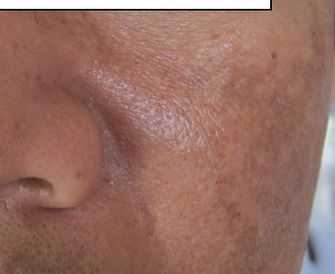 Brown spots, sun spots, age spots, liver spots: you’ve probably heard dark spots called many different things. Some of the most frequently asked questions I get are related to the dark spots people find on their face and hands. What are they? Will they turn into liver spots like on my grandmother’s hands? More importantly, how can I get rid of dark spots?
So the dark spots you see on your hands and face are probably from sun damage—over exposure to the sun where your melanin has rushed in to try and protect the skin. Remember, melanin, the pigment in our skin that protects us from the sun’s rays, is our own natural sunscreen.
The whiter your skin, the more likely you are to produce freckles, dark spots and sun damage. So if you’re born with fair skin, which doesn’t tan and burns easily, then you don’t produce much melanin. Sun damage can lead to dark spots, freckles, pigment which in turn can lead to skin cancer. Sun damage can occur in African-Americans just as it does with other skin types. Even though African-Americans have more melanin in their skin, it doesn’t protect the skin completely from the sun’s damaging rays nor from skin cancer. Dark spots and blotchy skin tone can be found on African-American skin also.
Another type of dark spot I want to mention is Melasma. Melasma is directly related to hormones, pregnancy and birth control pills. All these situations can tell the skin to make more pigment, which in combination with light can produce too much pigment. Melasma definitely looks different then dark spots from sun damage. Often brown, blotchy patches with a mask-like appearance can be found on the cheeks, forehead, and chin.
Last but not least are the dark spots which people experience from acne breakouts. These dark spots can appear on the face and body if you have suffered from acne in those areas. Sometimes people refer to these marks as acne scars but I like to refer to these types of spots left behind from acne as Post Inflammatory Hyperpigmentation or PIH. Out of all the dark spots we have mentioned in this article, these spots from acne can be dealt with easily if you have the right products and skincare professional to help you.
One of the most important thing we look at in our clinic is if you still have acne. If you do then you will continue to create more acne dark spots. So our goal is get your acne under control and lighten those spots all at once. We use a customized home care routine for your acne and in office treatments to help control and lighten up your pigment (PIH). Depending on how severe your pigmentation and acne is will dictate how long it will take to clear both.
Treating dark spots from acne is our specialty at Skintherapy Skincare and Acne Clinic.
Read more about our Acne Program here...
Some of the most frequently asked questions I get are related to the dark spots or sun spots people find on their face and hands—What are they? Will they turn into liver spots like on my grandmother’s hands? More importantly, how can I get rid of spots on skin?
Before

The sun spots on your hands and face are probably from over exposure to the sun where melanin, our body’s own natural sunscreen, rushed to the surface of your skin to protect you from harmful UV rays.
The lighter your skin, the more likely you are to produce sun spots and suffer sun damage. Such sun damage can lead to dark spots, freckles, pigment which in turn can lead to skin cancer. Sun damage can occur in African-Americans just as it does with other skin types. Even though African-Americans have more melanin in their skin, it doesn’t protect the skin completely from the sun’s damaging rays nor from skin cancer. Dark spots and blotchy skin tone can be found on African-American skin also.
After

Sun Spot Removal—Can I get rid of sun spots?
The answer is yes.
Sun spot removal treatments do exist and can be very helpful For people with light skin and spots on skin, I recommend a combination of chemical peels, IPL and topical lighteners for sun spot removal, as well as the daily use of sunscreen. People with darker skin tones, I recommend chemical peeling and topical lighteners in their skincare. It’s important to note here that darker skin tones generally take longer to respond and may take more treatments than someone with a lighter skin tone.
Skintherapy can help remove your sunspots.
Sun damaged skin can have a leathery texture, show marks of uneven pigmentation and redness, as well as excessive dryness and wrinkles. Ninety percent of sun damaged skin is caused by the sun. However, by following some simple guidelines and implementing effective skin treatments, you can repair sun damaged skin.
Some signs of damaged skin include:
TIPS FOR KEEPING YOUR SKIN HEALTHY
Wear sunscreen year round. Many people don't realize that even when driving in the car you can be exposed to UV rays. Make applying sunscreen a part of your morning ritual before heading outside. For women, sunscreen should be the last cream applied before their makeup. A 15 to 30 SPF is recommended. If you do plan on being outside for longer duration, a 30 SPF or higher is best and always reapply every 1 to 2 hours. Since damage accumulates over time, it's never too late to start a sun protection regimen now.
Exfoliate. Get rid of that dead skin build up. The sun along with age can slow down our cell turn over and cause the skin to look dull, uneven and dry. At home you can use scrubs or cleansers containing alpha hydroxyl acids to remove the dead skin. There are also professional exfoliating treatments for damaged skin; microdermabrasions and chemical peels will remove that dead skin layer, rehydrate and improve the penetration of your homecare products. Microdermabrasion and chemical peels can be done in a series of six for best results.
Check for cancer and pre cancers. A visit to the dermatologist is a must. Have them do a full body check. Your dermatologist can check for cancerous lesions and any actinic keratosis (precancers) and treat them accordingly.
Get rid of the brown spots. Those dark spots and unwanted pigment can be treated successfully. IPL is a great damaged skin treatment. Removing pigmentation can really enhance the appearance and texture of the skin. Also, removing pigment with IPL and chemical peels reduces the signs of damage and can reduce your risk of developing skin cancer later.
Use the right homecare products. There are so many skincare products on the market today. It's hard to know which products really do work and which are just marketing hype. I highly suggest seeking out a professional esthetician to help you with products. You've invested in skin treatments like microdermabrasions, chemical peels and IPL now complete the circle and invested in the most important aspect of successfully treating your damaged skin---skincare. Remember the right skincare will help preserve the gains you've already made with professional treatments and will make a world of difference in your skin—because skincare is used everyday!
An esthetician can analyze your skin. It's important to wash the skin and remove any makeup to do a thorough analysis. Now, ask yourself how many times the girl at the Nordstrom counter, Sephora counter, or at your local drug store has cleansed your face before recommending product? As an esthetician I like to touch the skin and look at a clean face under magnification. By doing this and asking the right questions, I can determine your correct skin type: dry, oily, combination. During the magnification analysis I can also see if you have blackheads, whiteheads, cysts, uneven texture, pigment, broken vessels etc. Then by taking into account your skin type, what your skin looks like under my magnifier and talking about what your goals are for your skin, we can effectively recommend the correct skincare products for you.
How We Repair Sun Damaged Skin
Personalizing treatments is the only effective response for how to repair sun damage. It is imperative to consider a persons skin type, color, and any contraindications they may present. We also take into account what type of work they do and how much downtime is reasonable. Then, we create a sun damaged skin treatment plan to meet a person's goals.
Here is a list of treatments I believe deliver the best results:
Vitamin A derivatives and Alpha/Beta hydroxyl acids hold the most significant data supporting their anti aging properties. Both topicals can provide therapeutic improvement in facial wrinkles, skin texture, discoloration and rejuvenation.
Vitamin A derivatives are prescription strength medications such as Renova (tretinoin ) and over-the-counter derivatives such as retinol. Tretinoin and Retinol increase collagen production, normalize abnormal sun damaged cells and increase cell turnover rates. However, retinols are essentially a weaker form of tretinoin due to the fact that when a retinol is applied to the skin, it must be converted into tretinoin by a skin enzyme. This makes a retinol product less aggressive because of the extra step.
Alpha and beta-hydroxy are derived from fruit, milk and grape acids. The most well known acid in this group is glycolic acid. Derived from sugar cane, it has been compared to Vitamin A for its ability to improve sun damage and increase cell turnover.
Vitamin A and Alpha Beta Hydroxy acids are both effective renewal products for the skin. I suggest using the Vitamin A or retinol once daily, always at night after you cleanse your face. Apply a thin layer about one hour after you cleanse and allow to dry. Try using this product alone at first to see if your skin can tolerate it. Give it a good two to three months of use. Your skin may be dry and flaky in the beginning but then should normalize. You can use the Vitamin A or retinol up to 6 months and then take a break. Vitamin A and retinols can thin the skin if the product contains corticosteriods, which many do, so over using is not recommended. When you have finished your first six-month cycle of Vitamin A or retinol, switch to using the Glycolic acid as your renewal product. Depending on the percentage of the glycolic acid (usually 5% or 10%), you may be able to use it in your morning routine and at night. See how your face fares by using it in the beginning just once a day. Then, if your not too irritated or dry, use it in the a.m. and p.m. After six months you can switch back to the Vitamin A renewal protocol.
Be aware that both these products can make you more sun sensitive, so always wear sunscreen. Also, tell your skincare provider about your use of these products if you're planning on getting a chemical peel or laser treatment. Some protocols for these services suggest that you stop using the Vitamin A products two weeks before a service is performed.


Copyright SkinTherapy Skincare & Acne Clinic. All Rights Reserved. Website Built by SEO Werkz